 Daily Pet Care Hub
Beagle Breed Guide
By Pet Mama · Published 2025-02-01 · Updated 2026-08-31 · 3 min read
Beagle at a glance
- Species
- Dog
- Size
- Small–Medium (18–30 lbs)
- Energy
- ●●●●●
- Shedding
- ●●●●●
- Grooming needs
- ●●●●●
- Apartment suitability
- ●●●●●
The Beagle is a merry, nose-driven scent hound — one of the most popular family dogs in the world, and one of the most frequently underestimated. Behind the cheerful, comic-strip image is a genuine working hound with a job-sized appetite for activity and sniffing.
Origin & History
Beagles descend from a long line of English scent hounds used for hunting rabbits and hare in packs, a sport known as "beagling." The modern breed was largely standardized in the 1830s by an English breeder who crossbred several hound lines for a smaller, faster pack hound. Beagles arrived in the United States after the Civil War and quickly became popular both as hunting companions and household pets; the American Kennel Club recognized the breed in 1885. Their extraordinary sense of smell later made them a natural fit for scent-detection work, most famously the USDA's "Beagle Brigade," which screens luggage at airports for agricultural products. Beagles come in two recognized size varieties — under 13 inches and 13 to 15 inches at the shoulder — with the larger variety being slightly more common as a family pet today.
Temperament
Friendly with everyone, great with kids, and sociable with other dogs (they were bred to work in packs). The flip side: they hate being alone and are prone to separation anxiety and vocal protest. A bored Beagle is a loud, resourceful Beagle. Their voice is distinctive, too — Beagles don't just bark, they bay and howl, a trait bred in so hunters could track a working pack by ear across open country.
Exercise Needs
High for their size: an hour daily minimum, ideally with sniffing time — a Beagle's nose needs exercise as much as its legs. Scent games and snuffle mats are gold, and a securely fenced yard gives them room to follow their nose without following it into the street. Beagles were built to travel for miles on a scent trail, so a short walk around the block rarely satisfies them the way a longer sniff-focused outing does.
Training Notes
Smart but independent; their nose outranks your treats outdoors. Keep sessions short, use high-value rewards, and never trust off-leash recall near open areas. Secure your trash and food — Beagles are legendary counter-surfers and escape artists, and a determined Beagle can find gaps in fencing that other breeds would never notice. Crate training and a securely latched gate are worth the upfront effort, since a Beagle that slips out on a scent trail can travel remarkably far before its nose lets it think about coming home.
Grooming
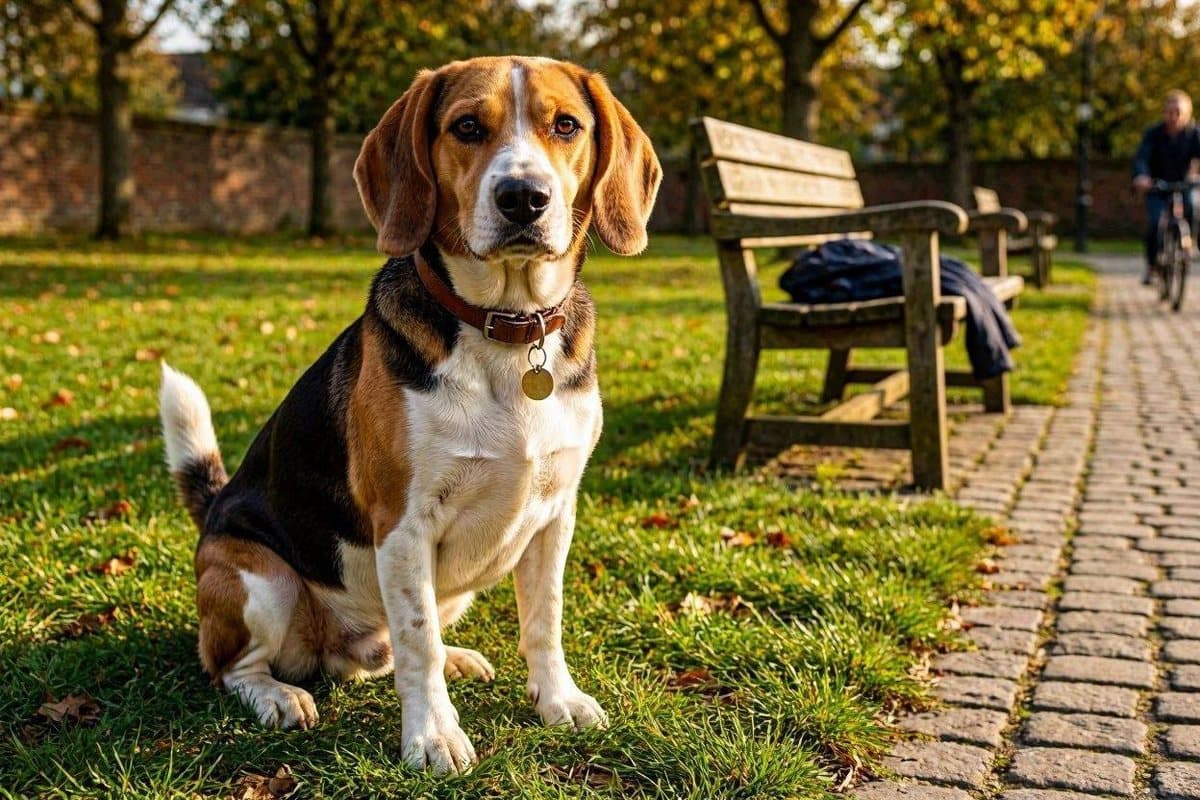
Easy: short coat, weekly brushing, standard nail and ear care. Their long, low-hanging ears trap moisture and debris and need routine checks for infection, especially after time outdoors. Beagles come in a variety of tricolor and bicolor combinations — most commonly the classic black, tan, and white — with no meaningful difference in temperament between color patterns.
Health & Weight
Beagles are food-obsessed and gain weight easily; measure every meal rather than free-feeding. Watch for ear infections, hypothyroidism, and epilepsy in some lines, along with cherry eye and glaucoma. With a healthy weight maintained, Beagles commonly live 10 to 15 years. Because this breed will rarely self-limit its own food intake, measured meals and minimal table scraps matter more here than for almost any other family breed.
Living With Kids & Other Pets
Few breeds handle a busy family household as naturally as the Beagle. Their pack-hunting background makes them genuinely social with other dogs, and their sturdy, good-natured temperament holds up well to the noise and activity of kids.
Is a Beagle Right for You?
Wonderful for active families with time, tolerance for noise, and a secure yard or committed leash-walking habit. Challenging in thin-walled apartments or long-hours-alone households, where the combination of vocal boredom and separation anxiety tends to surface fastest. If you love the idea of a merry, food-driven, kid-friendly dog and don't mind investing in secure fencing and daily sniff time, the Beagle rewards that effort many times over.
Frequently Asked Questions
Do Beagles bark a lot?
Beagles are vocal — they bark, bay, and howl, especially when bored or when scents excite them. Training and exercise reduce it but rarely eliminate it.
Can Beagles be let off-leash?
Rarely safely. Once a Beagle's nose locks onto a scent, recall often loses. Use long lines and secure fenced areas instead.
Where did Beagles come from?
England, where scent hounds resembling today's Beagle were used to hunt rabbits and hare in packs for centuries. The modern breed was standardized in the 1830s and later became one of America's most popular family dogs.
Why do Beagles get used for detection work?
Their extraordinary sense of smell, food motivation, and manageable size make them ideal scent-detection dogs — the USDA's well-known 'Beagle Brigade' uses them to sniff out agricultural products at airports.
Related Guides
Pembroke Welsh Corgi Breed Guide
Pembroke Welsh Corgi temperament, exercise needs, shedding reality, and health considerations for this beloved herding breed.

Standard Poodle Breed Guide
Standard Poodle temperament, exercise and grooming needs, and health considerations for this intelligent, versatile breed.

Boxer Breed Guide
Boxer temperament, exercise needs, heat sensitivity, and health considerations for this playful, people-loving breed.
Get one useful pet-care tip a week
No spam, unsubscribe anytime.