 Daily Pet Care Hub
Siamese Cat Breed Guide
By Pet Mama · Published 2025-01-17 · Updated 2026-08-31 · 3 min read
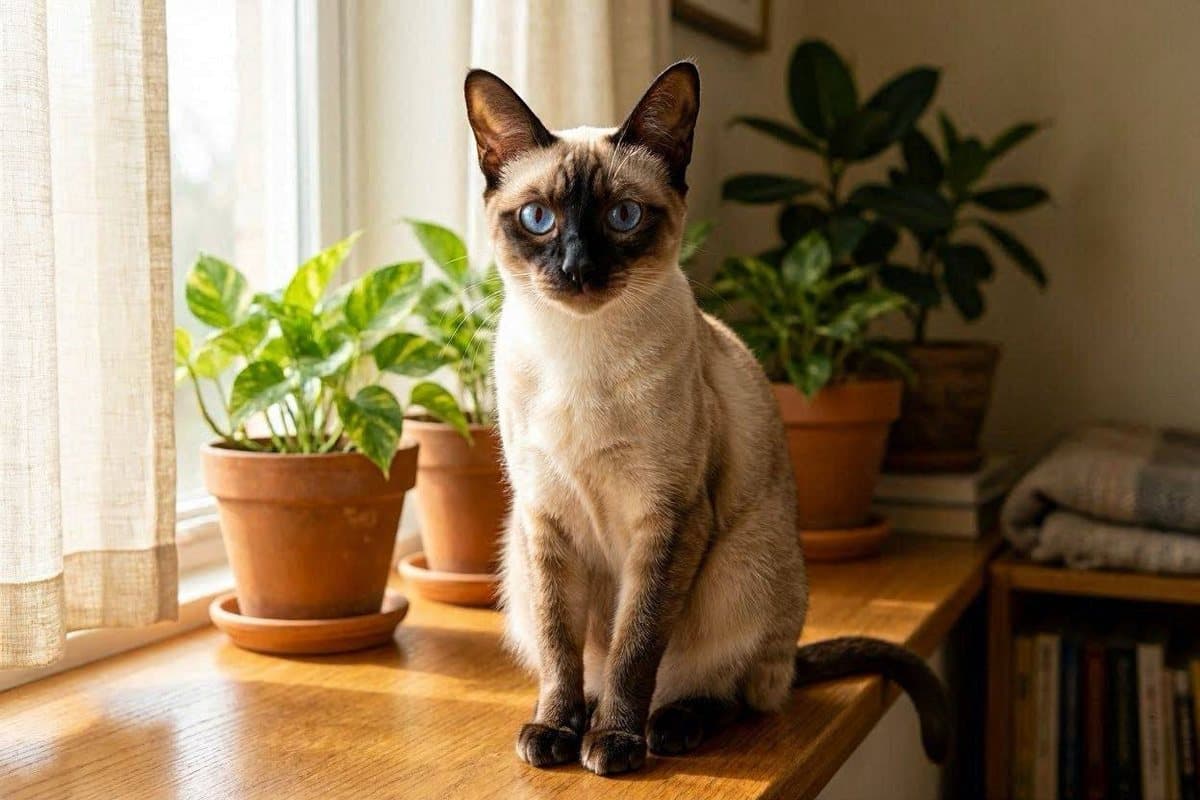
Siamese Cat at a glance
- Species
- Cat
- Size
- Medium (6–14 lbs)
- Energy
- ●●●●●
- Shedding
- ●●●●●
- Grooming needs
- ●●●●●
- Apartment suitability
- ●●●●●
The Siamese is the extrovert of the cat world: talkative, demanding, endlessly devoted, and never boring.
History & Origin
The Siamese is one of the oldest recognized cat breeds, documented in Thai manuscripts centuries before it reached the West. It arrived in Europe and North America in the late 1800s and was exhibited at London's Crystal Palace show in 1871, where its striking blue eyes and point coloring caused an immediate sensation. Modern show-style Siamese have a sleeker, more angular build than the original "applehead" type still favored by some breeders, but the personality has stayed constant across a century of refinement.
Distinctive Coat Colors
The Siamese point pattern is heat-sensitive: kittens are born pale, and the darker "points" on the face, ears, legs, and tail develop over the first weeks and months as the cooler extremities produce more pigment than the warmer body. Seal point (dark brown on cream) is the classic look, but chocolate, blue, and lilac points are all standard variations — essentially the same coloring at different intensities. Their vivid blue eyes are a breed-defining trait and, unlike some blue-eyed white breeds, don't carry any hearing risk.
Temperament & Personality
Intensely people-oriented. A Siamese follows you everywhere, supervises your chores, sleeps under your covers, and tells you — loudly — when dinner is late. They bond deeply, often to one person in particular, and can become anxious or destructive when ignored or left alone too long. This isn't a background pet; a Siamese wants to be part of whatever you're doing, and they'll make sure you know it. Many owners compare the breed to a dog trapped in a cat's body — for the right household, that's exactly the appeal.
Exercise & Play Needs
High energy and high intelligence: they need daily interactive play, climbing space, puzzle feeders, and ideally a feline companion or a household that's home often. Many learn fetch, walk on a leash and harness, and pick up simple tricks faster than most breeds — their sharp minds need a job as much as their bodies need exercise. Bored Siamese cats are prone to attention-seeking mischief, so enrichment isn't optional here.
Vocalization
The defining trait: a loud, low-pitched voice used freely and often, sometimes described as sounding like a crying baby. Charming to devotees, wearing to others — know yourself before adopting. A Siamese will announce hunger, boredom, and displeasure in equal measure, and training them to be quieter is possible but only partially effective; the breed is simply built to talk.
Grooming & Health
Grooming is minimal: the short, fine coat needs only weekly brushing, and their low shedding suits tidy homes well. Health-wise, Siamese are generally long-lived (commonly 15 to 20 years) but a few issues are worth watching:
- Dental disease — start brushing early since the breed is prone to buildup.
- Respiratory sensitivity — some lines have a narrower nasal structure than average.
- Amyloidosis — a hereditary liver condition documented in some Siamese bloodlines.
- Progressive retinal atrophy — rare, but reported in certain lines; ask breeders about eye screening.
Living With Kids & Other Pets
Siamese cats generally do well with children and other pets, provided everyone respects their need for attention — they can grow jealous or clingy if a new pet suddenly takes over their spotlight. A companion cat, ideally another Siamese or an equally social breed, often helps burn off their social energy when you're out of the house; see our separation anxiety guide if your Siamese struggles with alone time.
Is a Siamese Right for You?
Perfect for someone home a lot who wants an interactive, dog-like companion that talks back, learns tricks, and never lets you forget it's in the room. Wrong for those wanting quiet independence or long stretches of solo time — a lonely Siamese is an unhappy, vocal Siamese. If you're weighing a similarly vocal, people-focused companion, our Oriental Shorthair guide covers a close relative with an even wider range of colors and patterns.
Frequently Asked Questions
Are Siamese cats really that vocal?
Yes — they carry on genuine conversations with a distinctive loud, raspy voice. If you want a quiet cat, look elsewhere.
Can Siamese cats be left alone all day?
They cope poorly with long solitude. A second cat or a work-from-home household suits them far better.
Why are Siamese kittens born white?
Their point coloration is heat-sensitive — cooler areas of the body (face, ears, paws, tail) darken with age, while warmer newborn skin stays pale at birth.
Related Guides
Oriental Shorthair Cat Breed Guide
Oriental Shorthair temperament, vocal social nature, grooming, and care for this elegant, people-obsessed Siamese cousin.
Turkish Angora Cat Breed Guide
Turkish Angora temperament, activity needs, silky coat care, and health notes for one of the oldest natural cat breeds.
Birman Cat Breed Guide
Birman temperament, gentle social nature, silky coat care, and health considerations for this blue-eyed, white-gloved breed.
Get one useful pet-care tip a week
No spam, unsubscribe anytime.